Tohoku
Dewa Sanzan Shrine
- Where
- Yamagata Prefecture
- When
- September 2026, 3 days, 2 nights
- Route
- Tokyo Station → (JR local trains, 4 transfers, 11 hrs 30 min) → Tsuruoka Station → 20 min by rental car ※ Faster route: Tokyo Station → (JR Shinkansen, 2 hrs) → Niigata Station → (JR Limited Express Inaho, 2 hrs) → Tsuruoka Station → 20 min by rental car
- Cost
- ¥50,000
This article contains affiliate links. If you book through one of them, we may earn a commission at no extra cost to you.
Mt. Haguro, in Yamagata Prefecture, is a mountain of nature worship, and apparently a place of ascetic training. Knowing it’s not just scenic but a place of faith, even the trees seem to stand a little straighter.
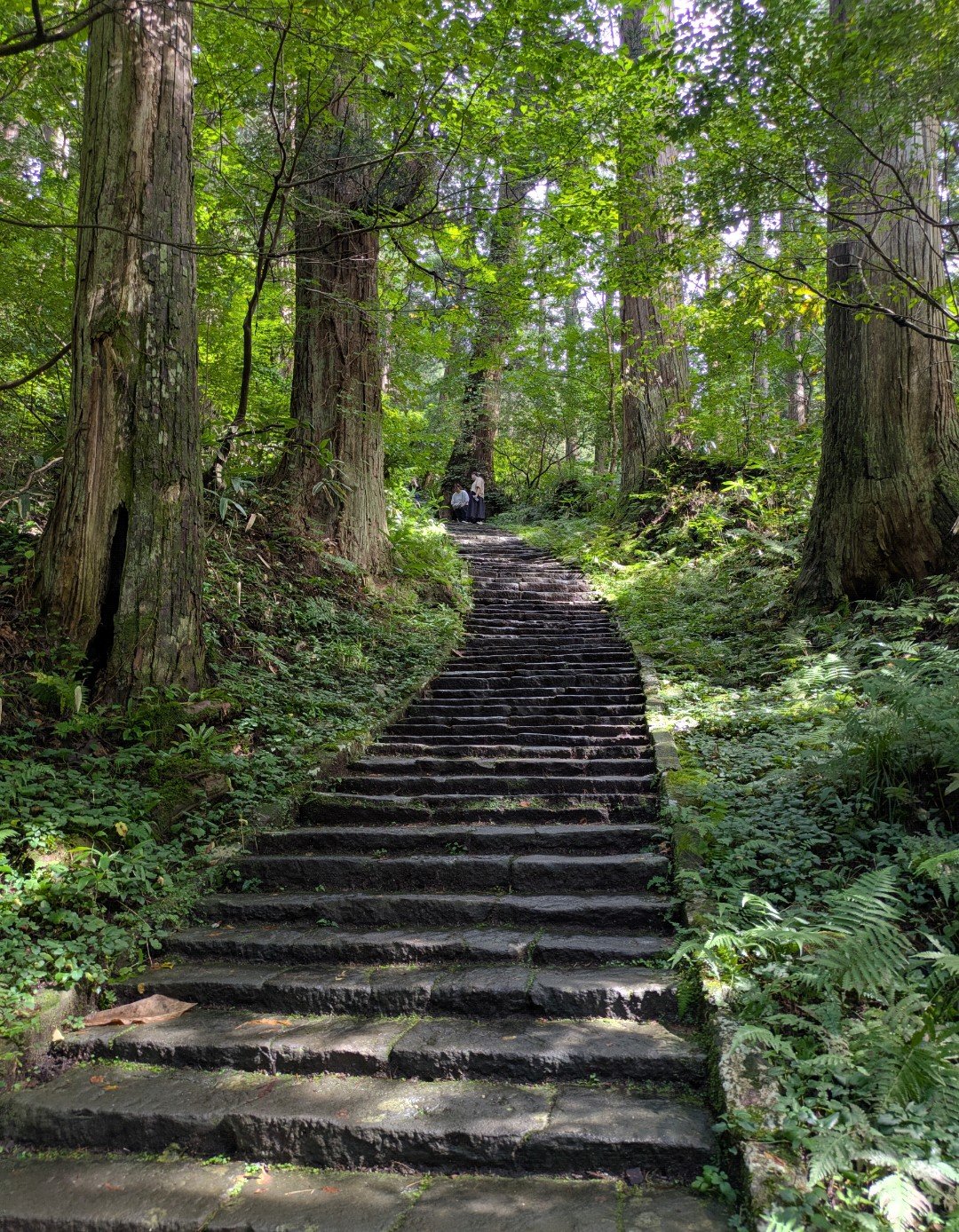
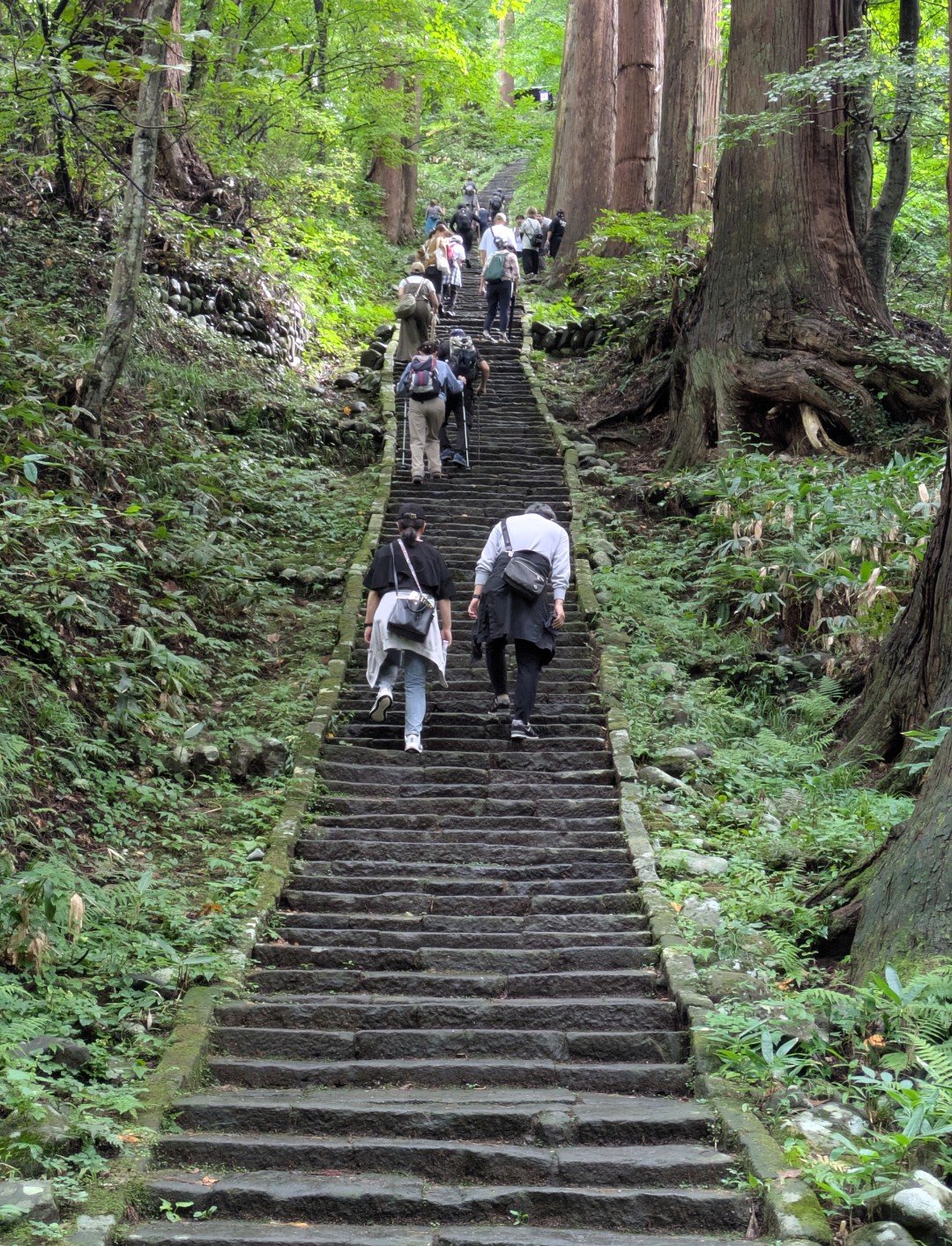
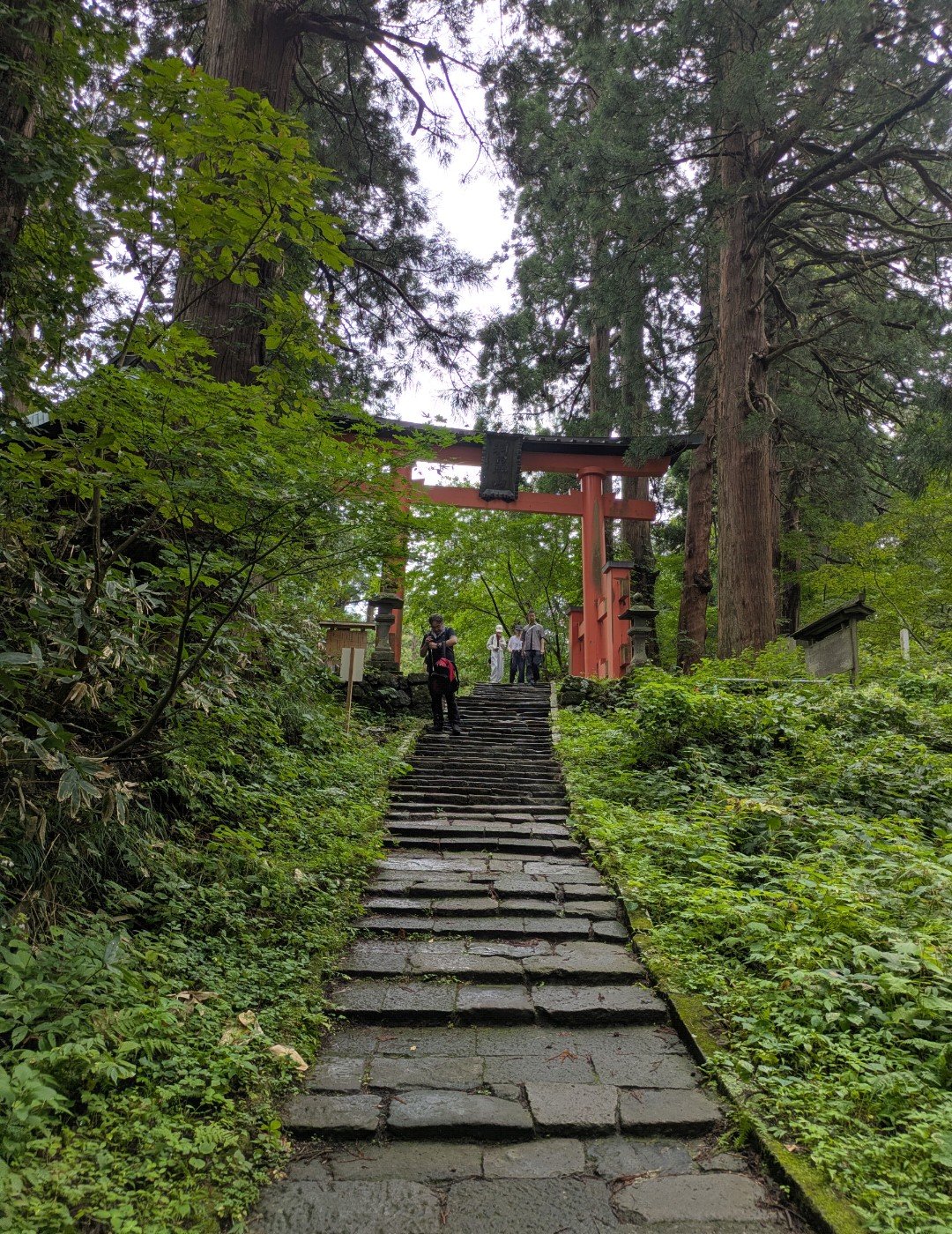
From the gate to the summit, I’m told, there are about 2,000 steps. I’m out of breath.
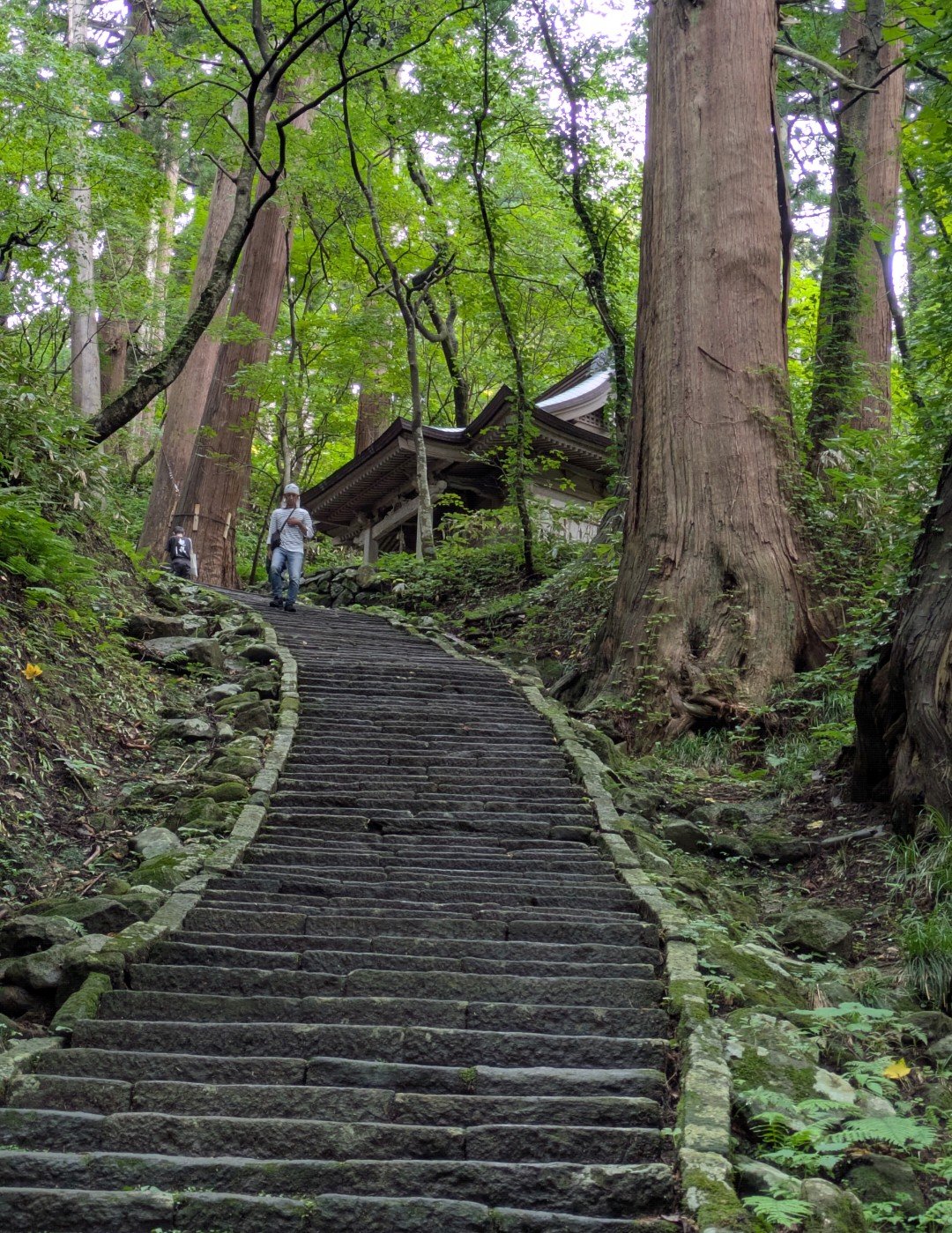
Long. Far too long. At this length I’d normally be looking for an escalator. An elevator would do, too. Civilization is a wonderful thing.
There’s a teahouse partway up. The view is lovely. It looks like you can have mochi (rice cakes) and matcha here. I had a feeling that if I stopped now, the summit would only get farther away, so I kept going.
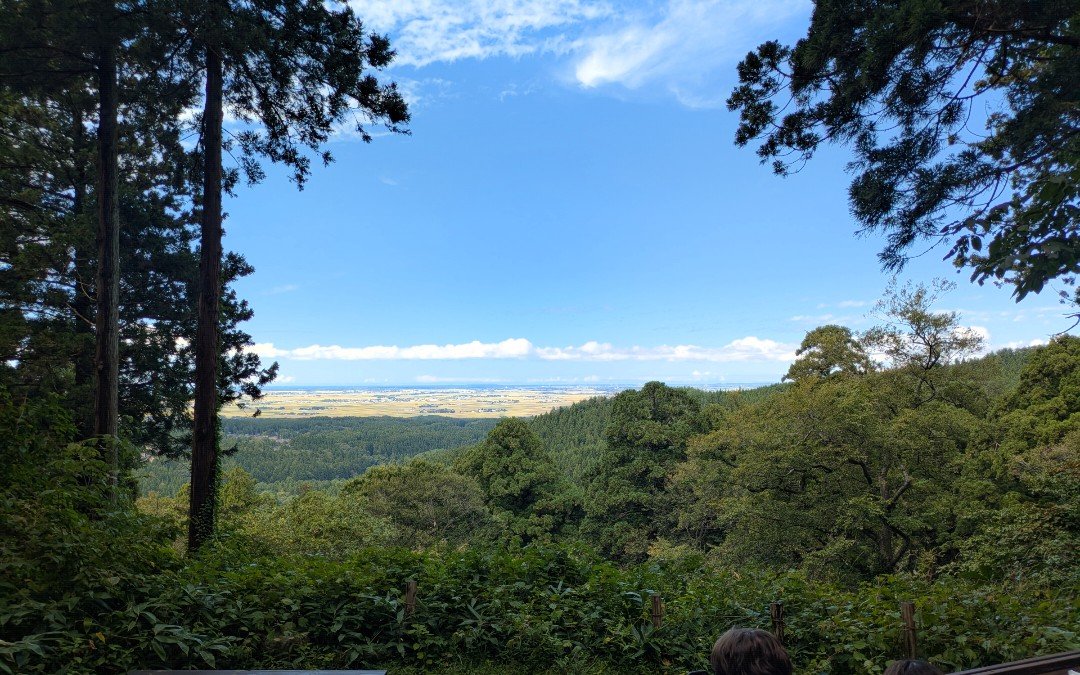
I can feel the blood racing through my whole body. Just as my legs start to ache, I reach the top.
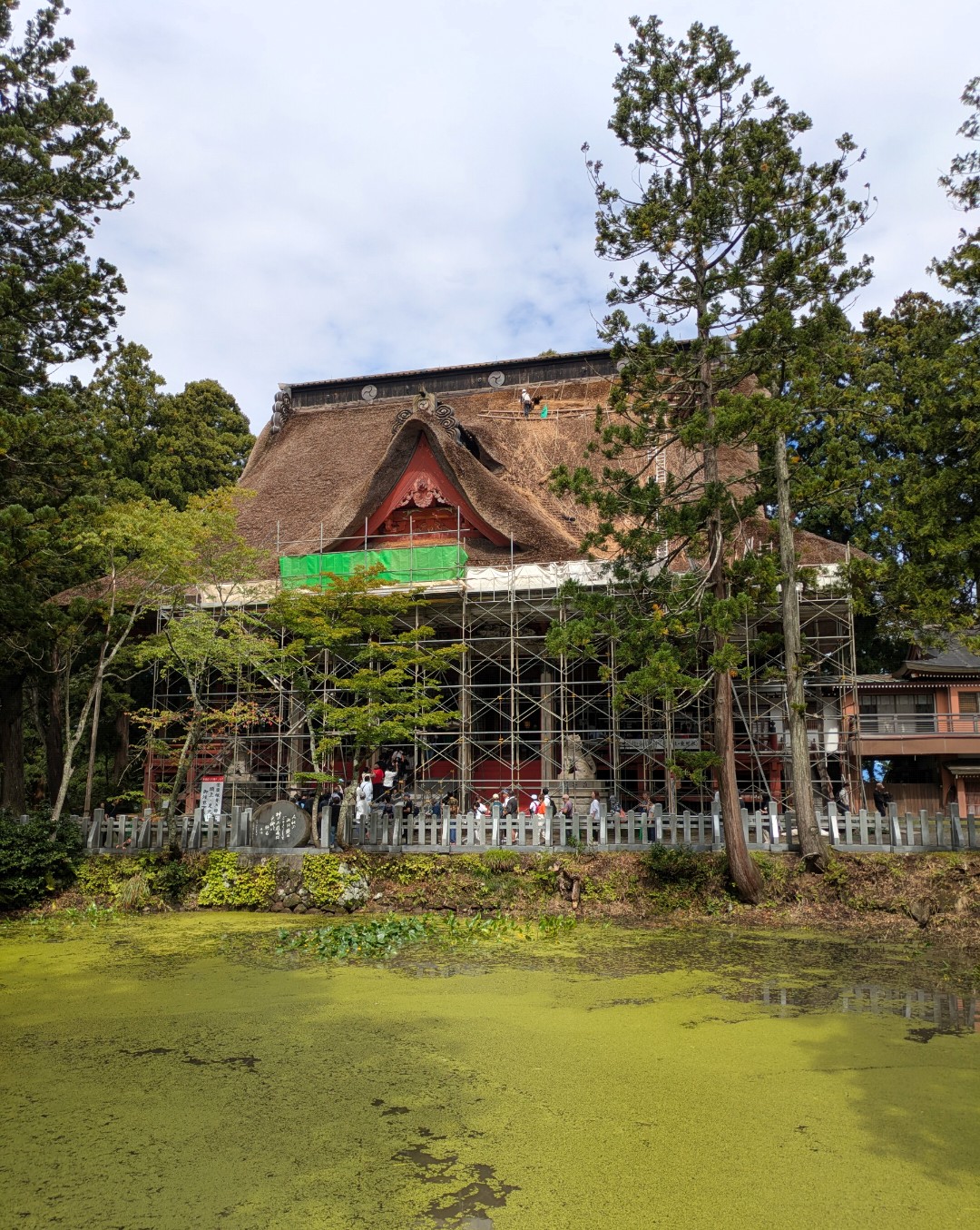
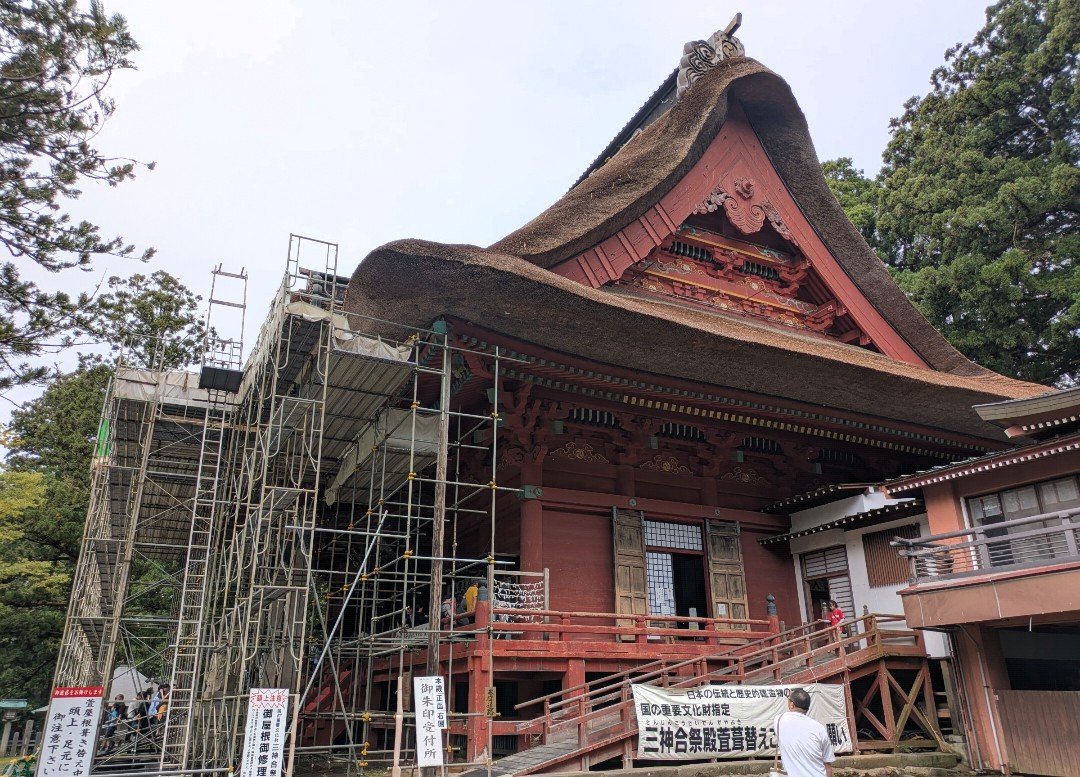
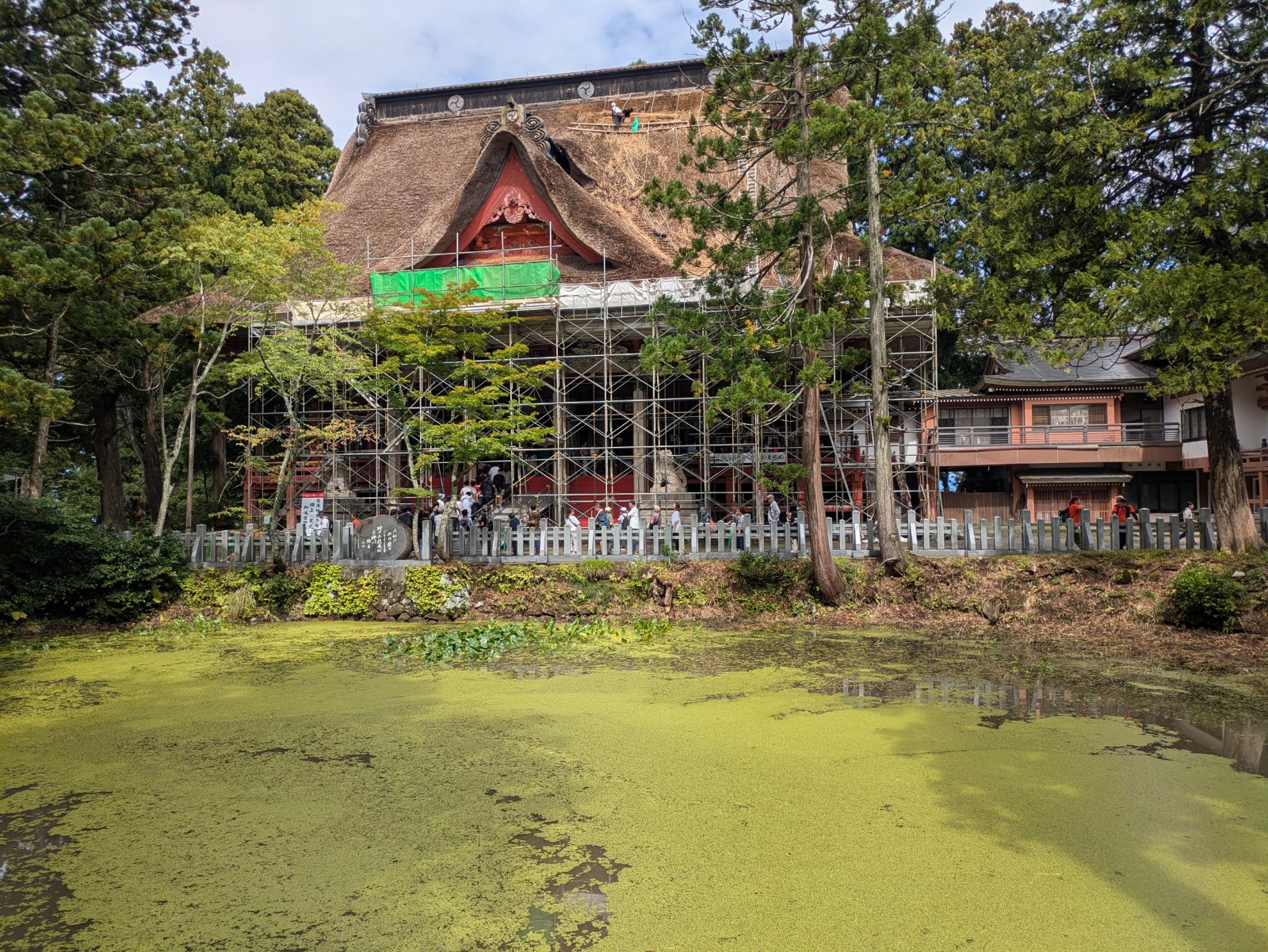
The main hall of Dewa Sanzan Shrine (the shrine of Dewa Sanzan, the Three Mountains of Dewa). Under renovation, of all things. I suppose it’ll be reborn with a new roof once the work is done. Come back looking beautiful.
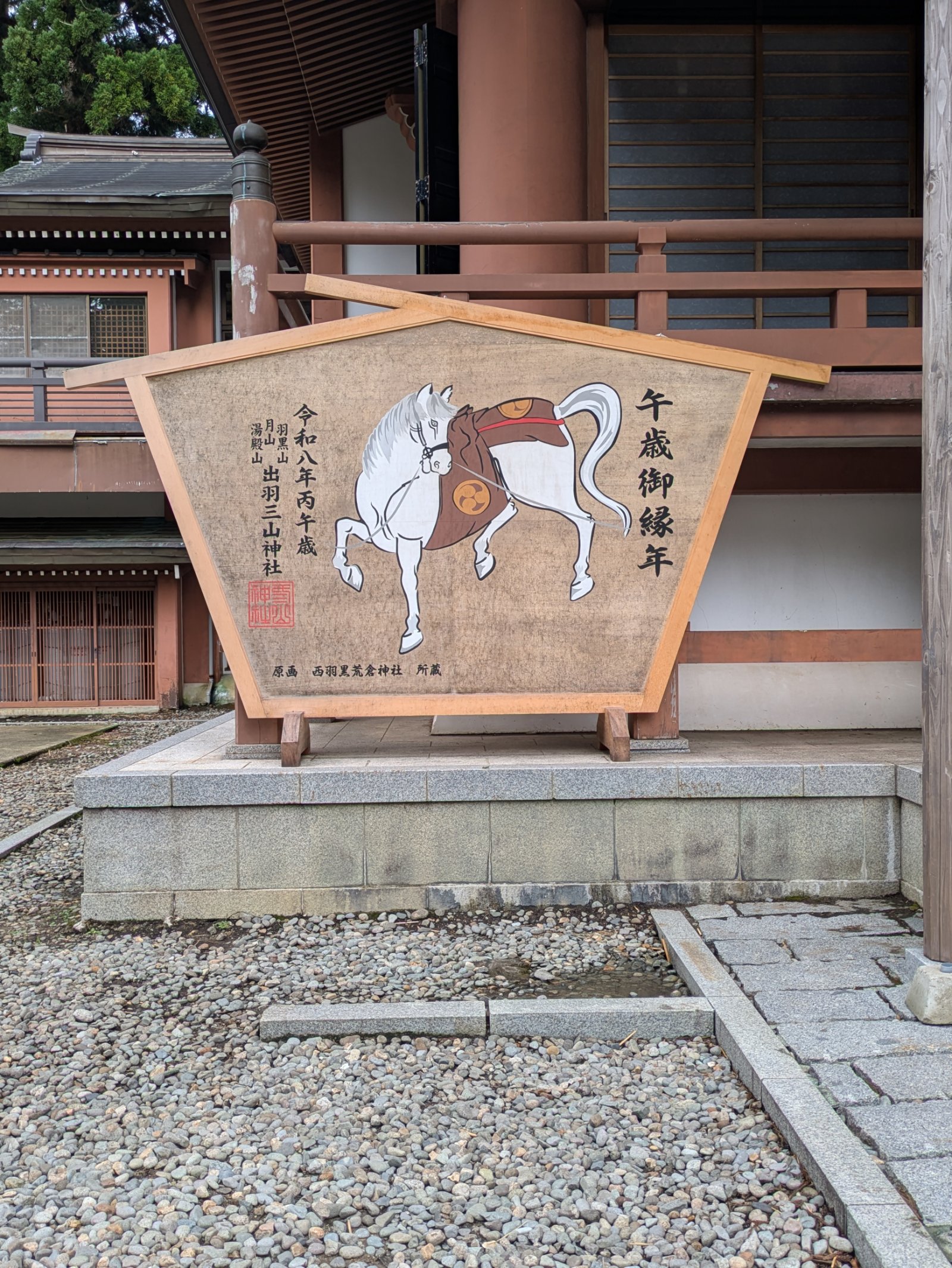
I came to Mt. Haguro purely on a whim this time. I just sort of felt like it. But it turns out Mt. Haguro has declared this year a Year of the Horse “year of sacred connection,” when a single visit is said to bring twelve years’ worth of blessings. Lucky me. I thought about making twelve wishes, but that felt so greedy I suspected none of them would come true, so I didn’t. As usual, I made just one.
Just as I finished praying, the sun began to peek out. I’ve heard that if the sky clears right after you pray at a shrine, it means the shrine is welcoming you. I’m the type to believe anything good (and convenient), so I’ve decided Mt. Haguro welcomed me.
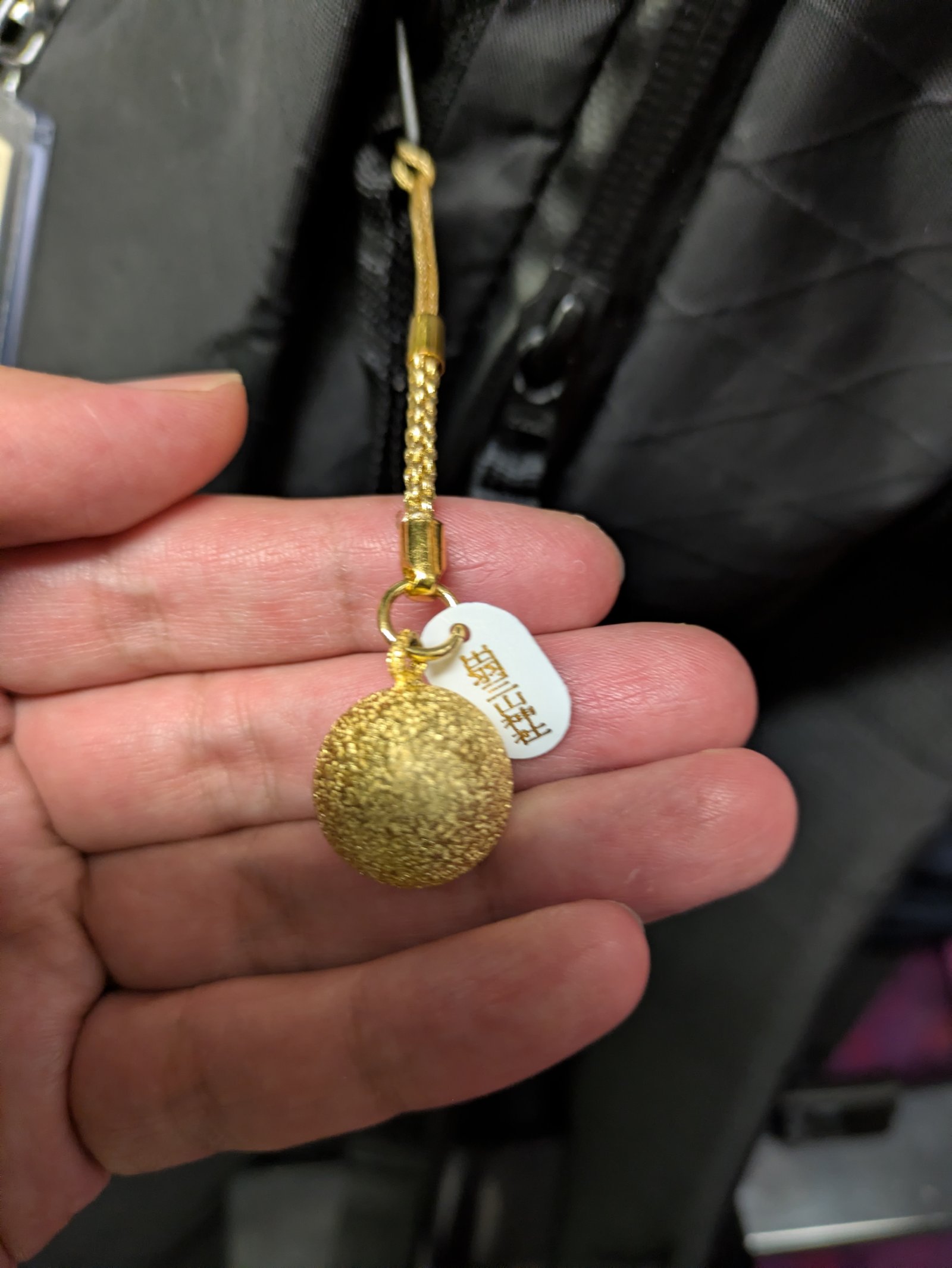
To mark the welcome, I went on a buying spree of omamori (protective charms). The bells have a lovely sound.
I was getting hungry anyway, so I headed back down the mountain to eat.
To be continued